On the afternoon of September 29th 2026, Thanh Binh Phu My Joint Stock Company (TBPM) – the developer of Phu My 3 Specialized Industrial Park (PM3 SIP) – was honored to be invited to the 6th Vietnam Industrial Property Forum (VIPF 2026). Co-organized by the Vietnam Investment Review and the Vietnam Industrial Real Estate Association (VIREA), the event was held under the theme “Opportunities Amidst Turbulence”. The forum served as a strategic gathering point, bringing together leaders of ministries and sectors, international organizationssuch as UNIDO, top-tier consulting firms (JLL, Savills, KPMG), alongside the community of infrastructure developers and major manufacturing enterprises, to shape the roadmap for attracting next-generation FDI into Vietnam.

Delegates attending VIPF 2026
At this year's forum, TBPM was proudly honored and awarded the title of “Leading Green Industrial Real Estate Developer 2026”. On behalf of the company's Board of Management, Mr. Ta Quoc Bao – Deputy General Director, directly received this prestigious award. This marks a reputable recognition of the persistent efforts by the PM3 SIP collective in creating a green, synchronous, and internationally standardized industrial ecosystem.
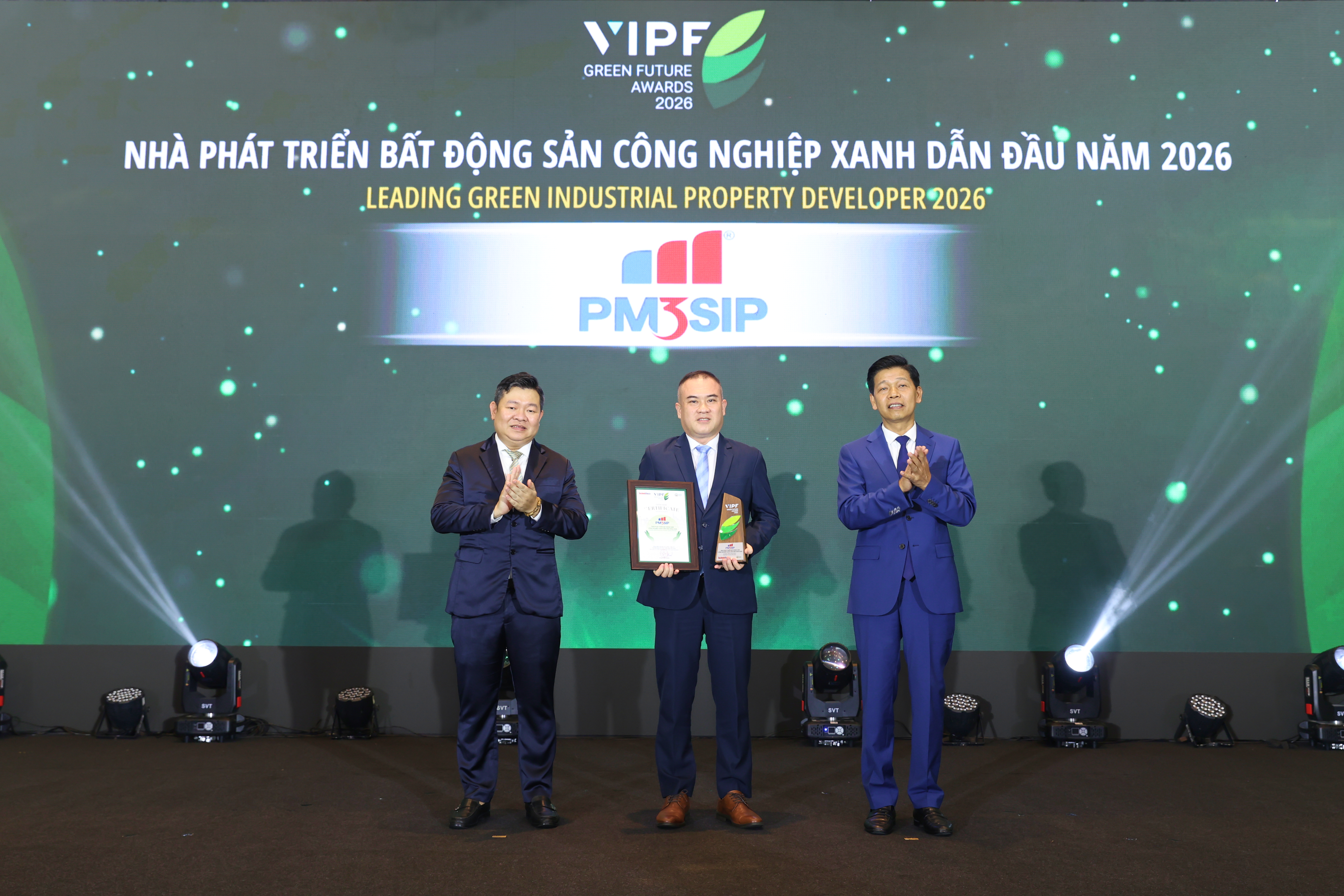
Mr. Ta Quoc Bao – Deputy General Director of Thanh Binh Phu My JSC, receiving the award on behalf of the company at VIPF 2026
Alongside the milestone at the honoring ceremony, Ms. Nguyen Thi Thao Nhi – Chairwoman and General Director of TBPM, also had the privilege of being one of the key speakers invited to participate in Session 1 – Strategic Dialogue themed “Vietnam in the Global Manufacturing Realignment”. Moderated by Mr. Le Trong Minh (Vietnam Investment Review), Ms. Nguyen Thi Thao Nhi engaged in a multi-dimensional discussion with leading representatives from regulatory agencies, associations, and industry experts: Ms. Vuong Thi Minh Hieu – Deputy General Director of the Foreign Investment Agency (Ministry of Finance); Mr. Truong Gia Bao – Vice Chairman and Secretary General of the Vietnam Industrial Real Estate Association (VIREA); Mr. Nguyen Tuan Anh – General Director of Stavian Industrial Park Corporation; and Ms. Trang Le – General Director of JLL Vietnam.
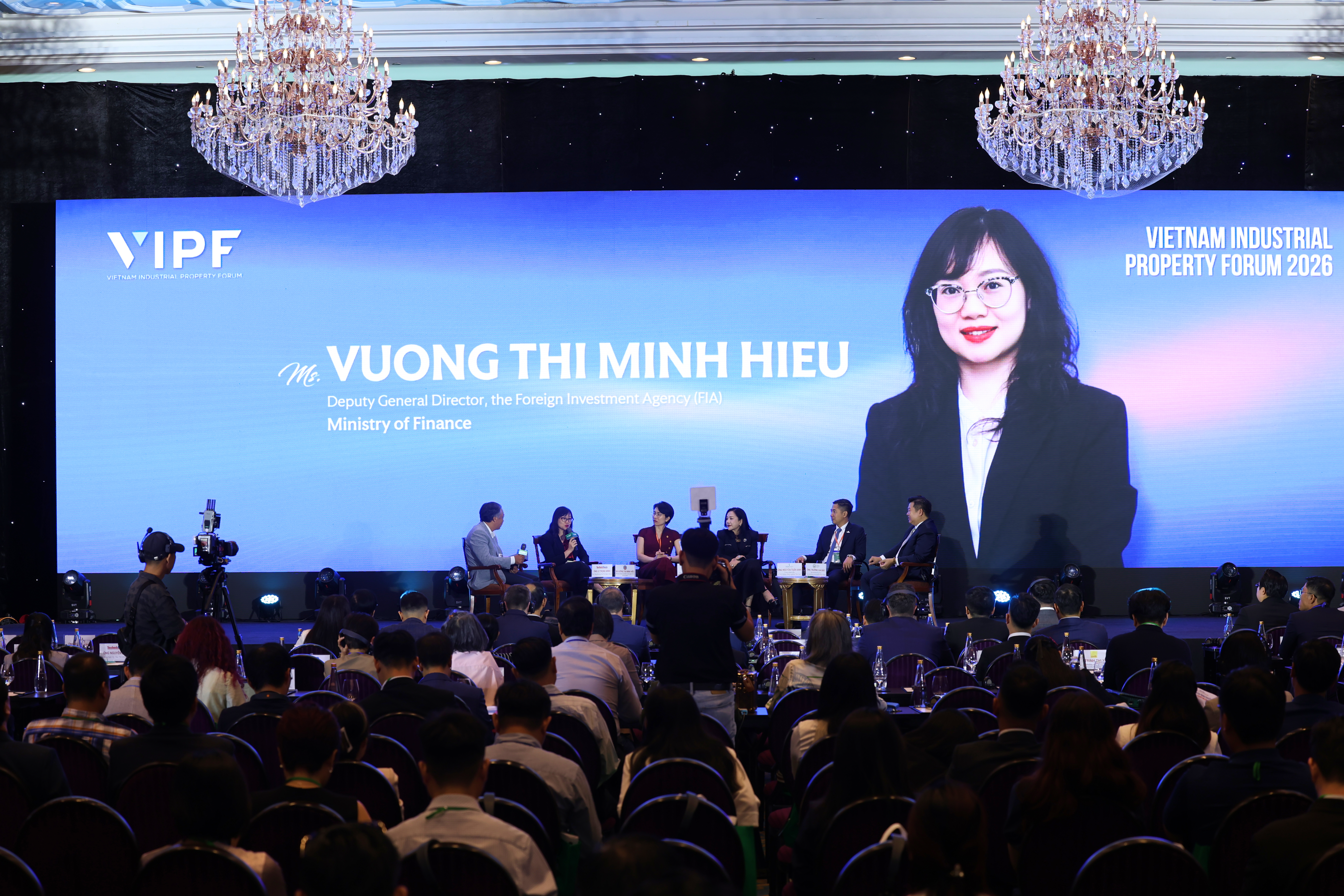
Ms. Vuong Thi Minh Hieu – Deputy General Director of the Foreign Investment Agency, Ministry of Finance, at the event
The overall picture at the panel discussion showed that the global supply chain realignment is entering a phase of fierce competition. Citing data from the past 10 years, Ms. Trang Le (JLL Vietnam) pointed out that the manufacturing FDI market share in China has decreased by 40.5 percentage points, driving the “China+1” wave toward ASEAN. However, Indonesia and Thailand are making strong breakthroughs, increasing their market shares by 12.4 and 9.1 percentage points respectively, while Vietnam only recorded a 3.2 percentage point increase. As traditional low-cost advantages gradually diminish, international investors are compelled to recalculate their “total cost” equation based on three pillars: the quality of technical human resources, energy security tied to a green ESG roadmap, and the speed of legal procedures for factory construction. From a macroeconomic perspective (especially following Resolution 10-NQ/TW in 2026), representatives from the Foreign Investment Agency and VIREA also affirmed that Vietnam is shifting its focus from attracting FDI by scale to prioritizing high-quality investments (semiconductors, AI, data, green manufacturing) in tandem with administrative reforms.
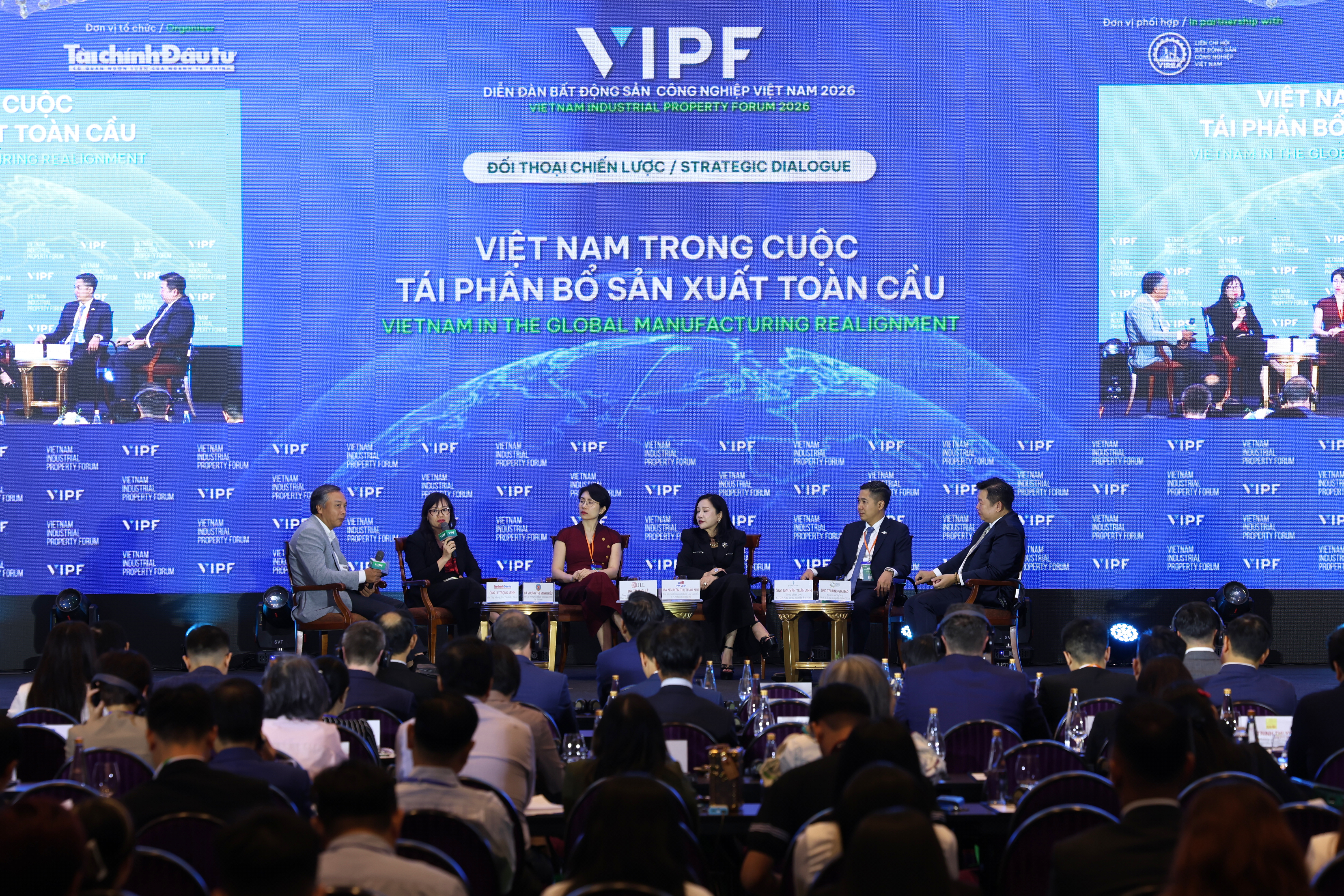
Speakers participating in the panel discussion
Practical perspectives from Phu My 3 Specialized Industrial Park: Translating ecological standards into substantive operational values
From the standpoint of an infrastructure developer directly accompanying the journey of international investors, Ms. Nguyen Thi Thao Nhi stated that when discussing industrial real estate, it is essential to start with the core objective of industrial development and investment attraction. From there, localities must clearly identify target factory groups that align with their specific orientations and comparative advantages, rather than merely developing industrial parks in a conventional manner. Sharing insights from market realities and operations at Phu My 3 Specialized Industrial Park, Ms. Thao Nhi highlighted a clear divergence between domestic manufacturing enterprises and the FDI sector:
Dual pressure on domestic manufacturing enterprises: Opportunities for domestic manufacturers to build an autonomous industrial base remain constrained by immense pressure from input costs. High interest rates and capital costs make it difficult for domestic businesses to substitute imported goods or increase their localization rates. This is compounded by fierce competition in recruiting and retaining personnel (in manufacturing, construction, and logistics) and fluctuations in raw material prices due to regional conflicts. The reality at Phu My 3 Specialized Industrial Park (with 999 hectares) is that there are currently only three Vietnamese investors, while the vast majority are FDI enterprises. This demonstrates that without solving the equation of production cost optimization, it is highly challenging for domestic enterprises to compete for access to synchronously invested industrial parks.
The “China+1” wave enters the ESG screening phase: Conversely, Ms. Thao Nhi emphasized the need to clearly distinguish the “China+1” wave of the previous period from the prevailing trend of the coming years. While multinational corporations previously relocated primarily to bring production closer to end markets, rapidly expand capacity, and resolve export bottlenecks, the new wave of relocation imposes mandatory requirements regarding ecological standards, the circular economy, sustainable development, and ESG compliance.
Transitioning to the new-generation industrial park: High investment costs coupled with service quality commitments
As the operator of the first specialized industrial park developed toward a symbiotic eco-industrial park, Ms. Nguyen Thi Thao Nhi emphasized that the new appetite of global corporations is driving the inevitable transition from traditional industrial parks to new-generation ones. Instead of clearing land and developing infrastructure in rolling phases to reduce capital costs like the traditional model, the new-generation industrial park model pursued by Phu My 3 requires the developer to inject substantial capital to synchronously develop the entire traffic system, power supply, water supply, centralized wastewater treatment, clean energy, and international-standard support services right from the start, before welcoming investors.
"Due to the requirement of synchronous initial investment with high financial and capital costs, the industrial park's land lease price may be pushed higher than the regional average. A higher price means better services. However, if these requirements are not met, Vietnam might miss out on higher-quality projects," Ms. Thao Nhi affirmed.
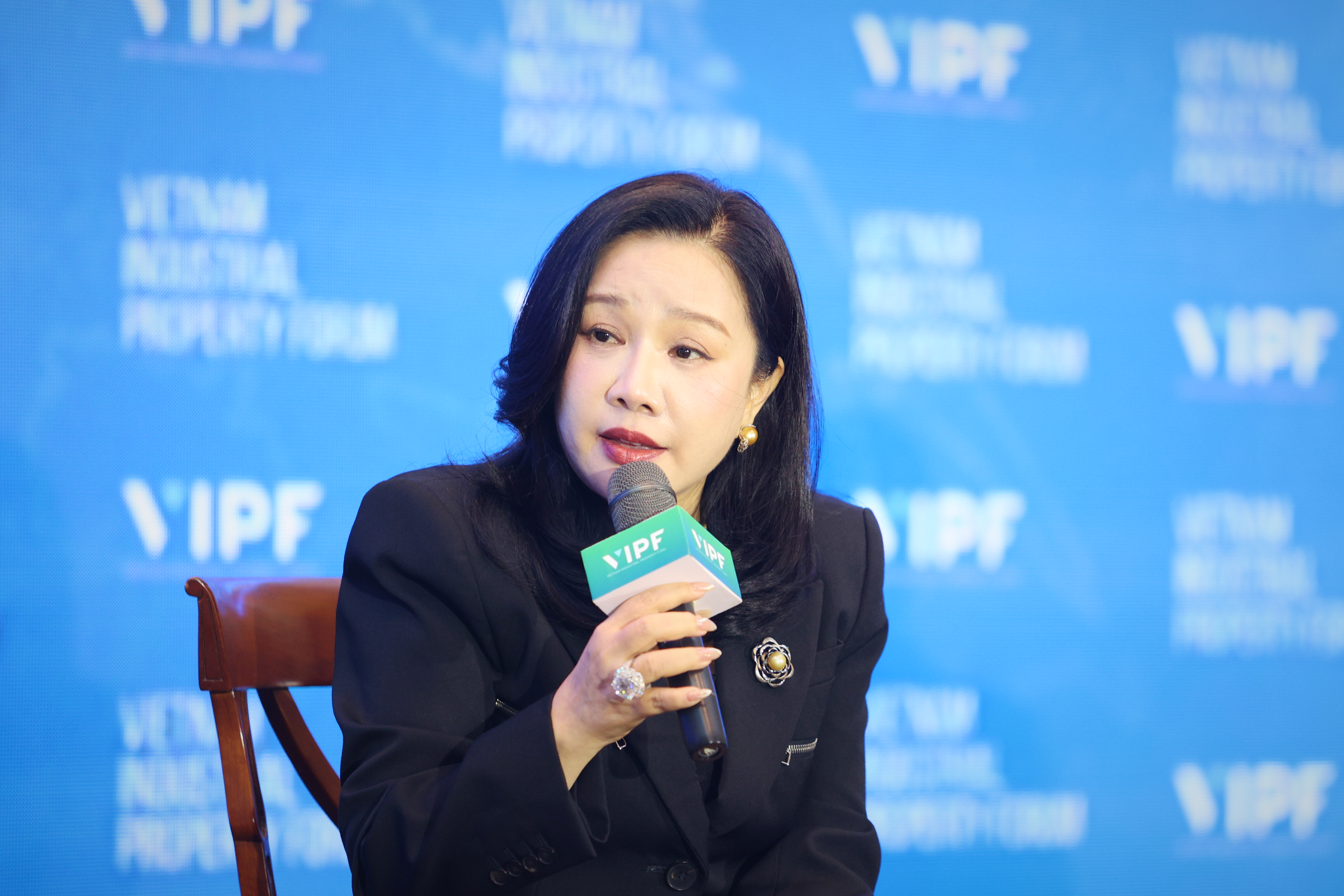
Ms. Nguyen Thi Thao Nhi, Chairwoman and General Director of Thanh Binh Phu My JSC, developer of Phu My 3 Specialized Industrial Park, speaking at the event
Infrastructure ready to the fence – Synchronization needed in procedural speed and policy consistency
At Phu My 3 Specialized Industrial Park, the technical infrastructure system is always fully prepared right up to the factory fence, accompanied by a “one-stop” mechanism providing maximum support so that investors only need to build and install their equipment. However, for this infrastructure advantage to reach its full potential, Ms. Nguyen Thi Thao Nhi frankly recommended removing two bottlenecks regarding administrative and legal procedures.
Speed of construction and operation licensing: Under favorable conditions, the fire prevention and fighting approval procedure takes at least 45 days, the environmental permit takes at least 45 days, and the basic design appraisal takes another 25–30 days. The total procedure time stretching to 3–4 months makes it very difficult for FDI enterprises to complete factory construction within 6–8 months to meet global delivery schedules, especially when similar procedures in China take only a few days.
Stability and consistency of legal regulations: Persisting with a sustainable development orientation established 15 years ago to attract the chemical and post-petrochemical industries, Phu My 3 Specialized Industrial Park has invested in and effectively operated a centralized wastewater treatment model to meet the strict environmental control requirements of Japanese and European investors. However, when legal regulations on connection and discharge change and are applied simultaneously to both operating factories and those preparing to expand, this model encounters new obstacles that inflate costs for investors, causing the construction of two factories in the industrial park to stall for the past 8 months while waiting for a resolution.
Closing VIPF 2026, the event brought immense practical value to PM3 SIP. Alongside the pride of being honored as the "Leading Green Industrial Real Estate Developer 2026" – a prestigious testament to its sustainable development vision over the past 15 years – the forum also served as a crucial bridge helping TBPM directly convey its voice from practical operations to policymakers, while expanding its strategic connection network with international organizations and the global investor community.
Following the achievements and momentum from VIPF 2026, Thanh Binh Phu My Joint Stock Company is committed to maintaining its role as a pioneering industrial park by investing in synchronous technical infrastructure, elevating the quality of support services, and steadfastly developing according to a green orientation linked with international ESG standards. Phu My 3 Specialized Industrial Park has readied all resources to remain a strategic and reliable destination for the next-generation FDI wave, actively contributing to the green and sustainable growth goals of Vietnam's industry.